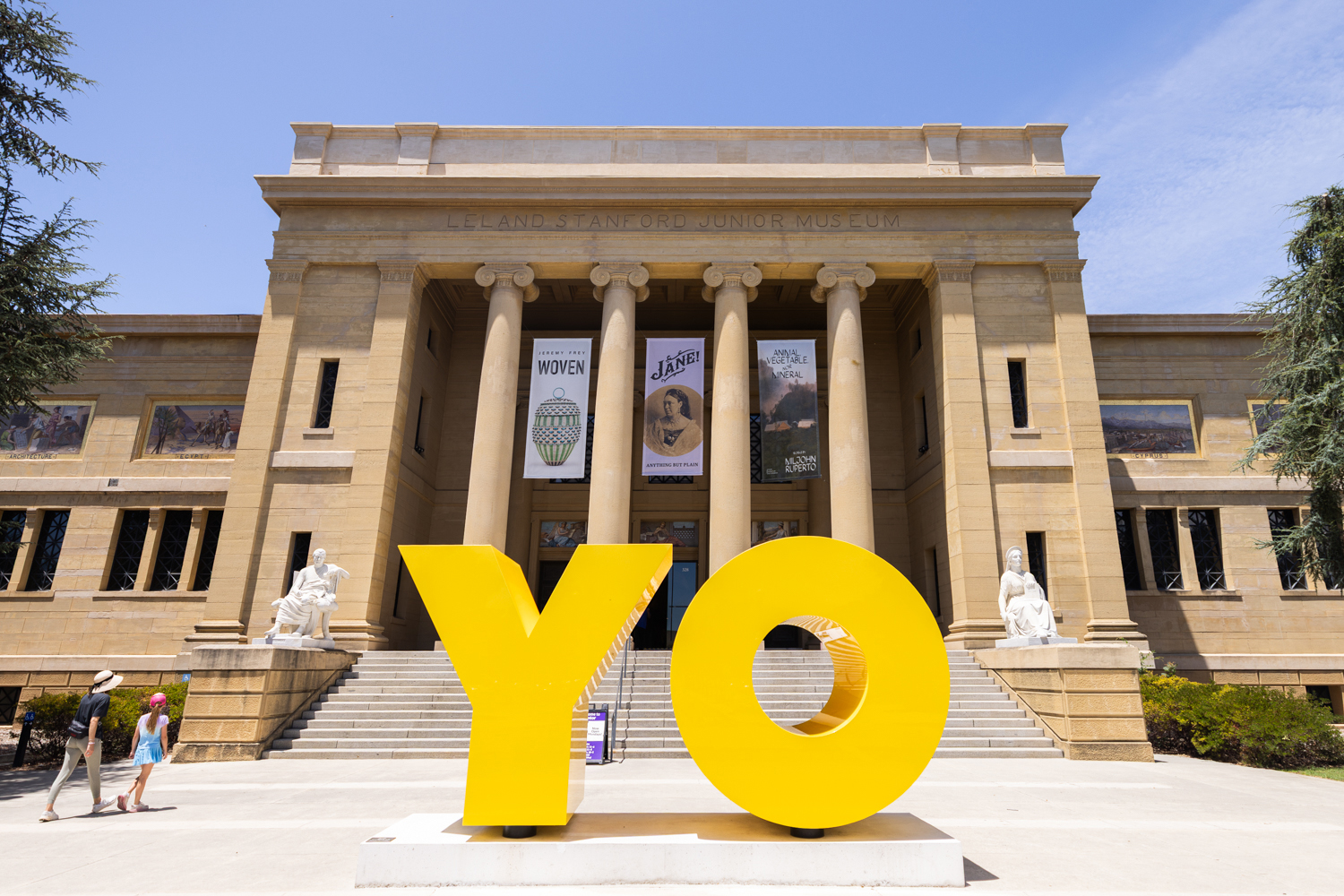
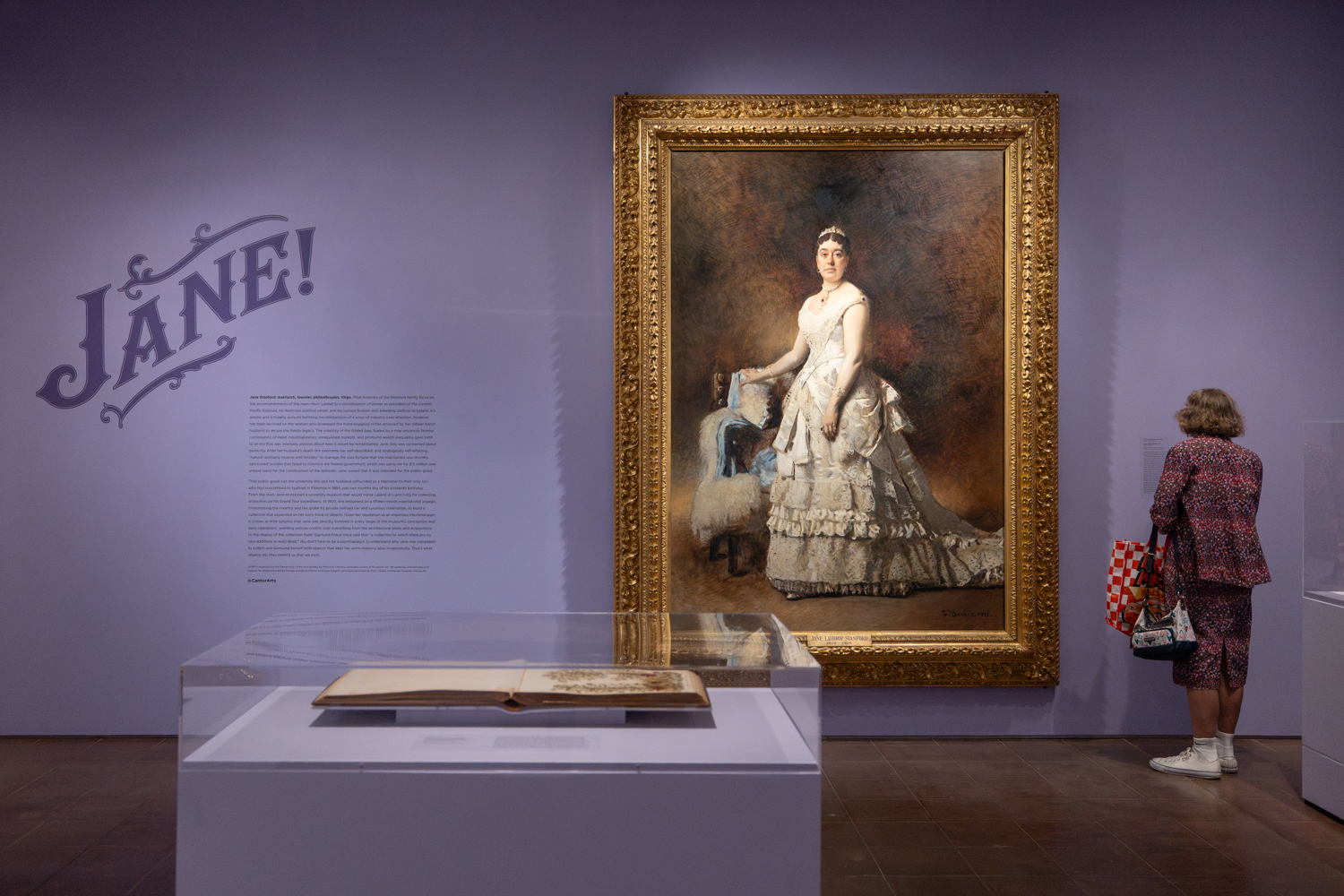
The Archive Rooms series invites visitors to explore the personal papers and ephemera of artists exhibited at the Cantor Arts Center whose archives are housed in the Department of Special Collections at Stanford University Libraries.
A new iteration of the Cantor Art Center’s Archive Rooms concept is on view at the museum through the 2025-26 academic year.
Archive Room: Ester Hernandez presents seldom-exhibited artwork alongside ephemera, writing, and family photographs from the artist’s archive, which was acquired by Stanford University Libraries in 2001.
Hernandez, born in 1944 of Yaqui and Mexican ancestry, is known for vivid prints and pastels that are among the permanent holdings of many renowned institutions, and for her deep commitment to the farmworkers labor movement and other causes. Sun Mad (1982) uses bold visual language to call out pesticide contamination of groundwater by the grape industry that employed the artist’s family. State of California (1994) addresses mercury contamination impacting Indigenous communities across North America.

Facsimile of photograph depicting Ruth Asawa casting the faces of Alvarado Elementary School students and artists. Photographed by Terry Schmitt (1976), 2025. Inkjet prints. | Courtesy Department of Special Collections, Stanford Libraries
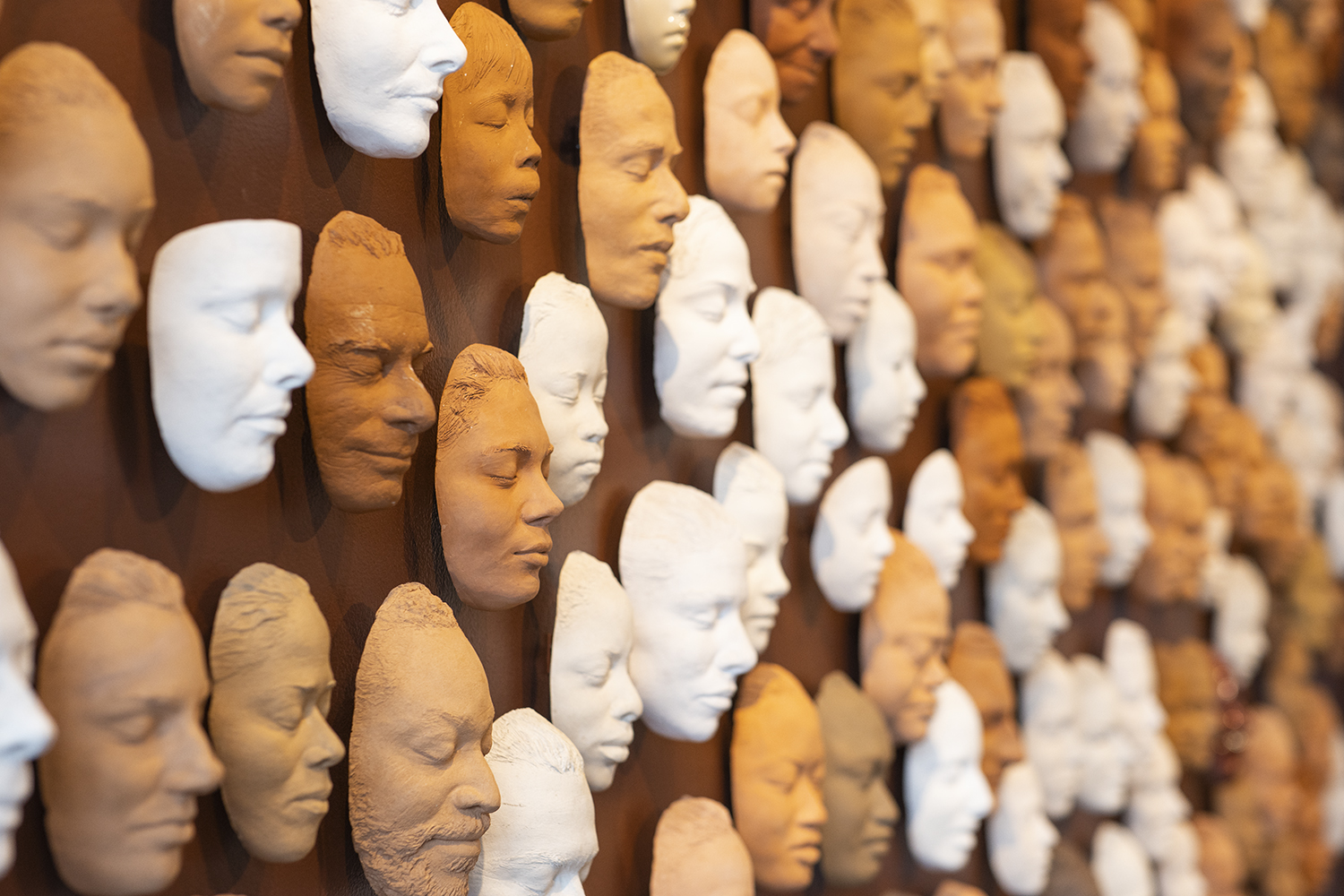
The 233 masks that originally hung on the exterior of Ruth Asawa’s family home in Noe Valley were mounted as part of the long-term installation, The Faces of Ruth Asawa, at the Cantor Arts Center. | Andrew Brodhead
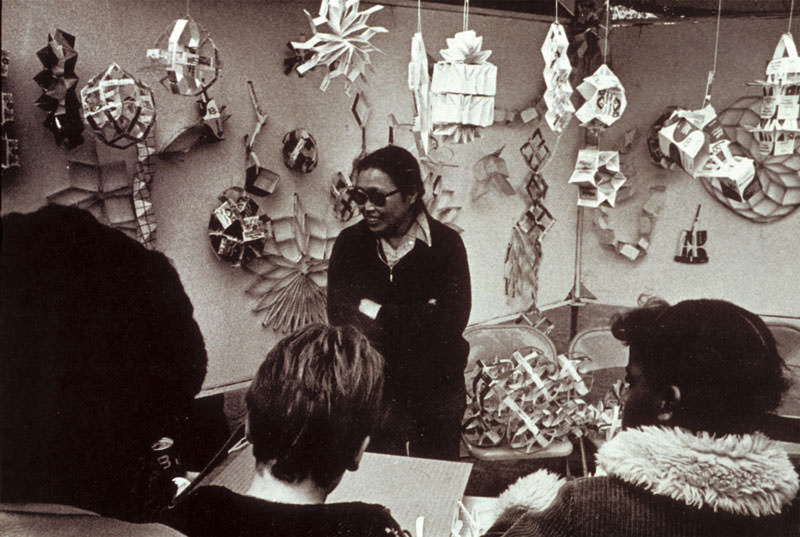
Ruth Asawa teaching geometric patterns with milk cartons, c. 1981. | Artwork © 2025 Ruth Asawa Lanier, Inc., Courtesy David Zwirner. Courtesy Ruth Asawa Lanier, Inc.
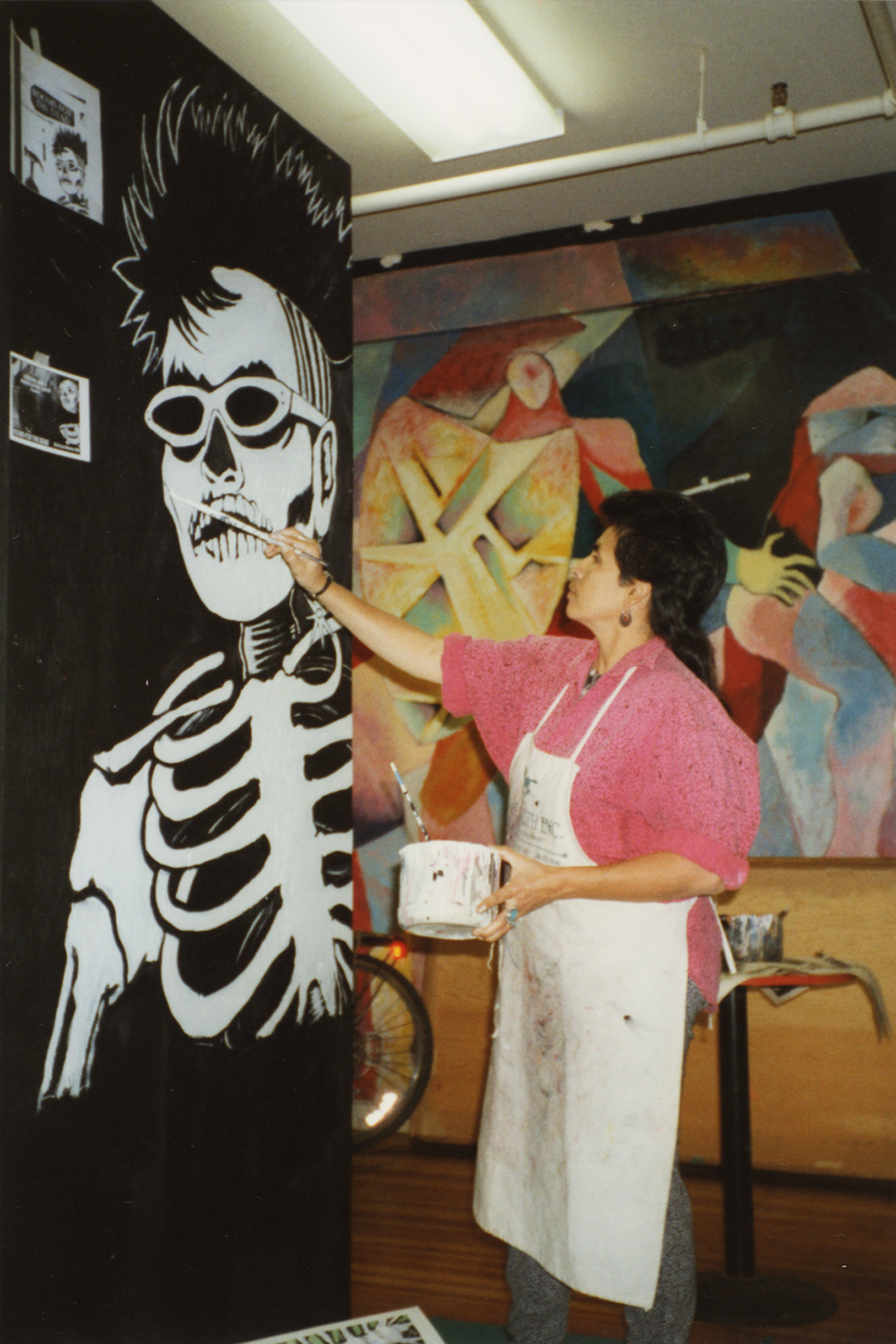
Ester Hernandez at Mission Cultural Center, Day of the Dead, 1992. | Courtesy Department of Special Collections, Stanford University Libraries. Used with permission from the artist.

Ester Hernandez, Sun Mad, 1982. | Courtesy Department of Special Collections, Stanford University Libraries. © Ester Hernandez
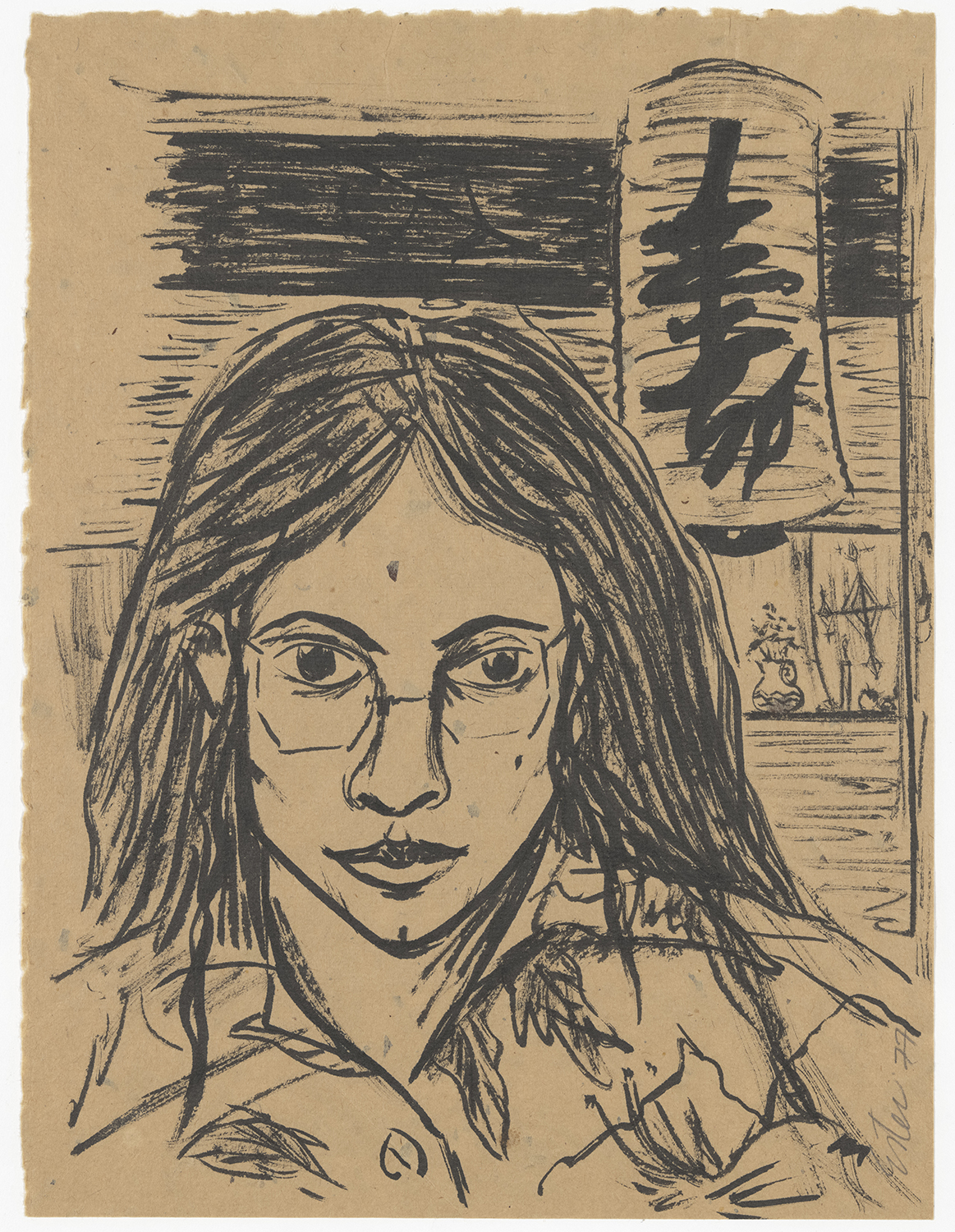
Ester Hernandez, Self-Portrait, Berkeley, 1977. | Courtesy Department of Special Collections, Stanford University Libraries. © Ester Hernandez
The exhibited materials include a family photo of Hernandez’s grandmother, mother, and uncle in a makeshift Texas railroad construction camp circa 1916 and a self-portrait drawn while at the University of California, Berkeley, in 1976. Photos of her work in 1990s San Francisco – including teaching at Creativity Explored, a studio for artists with developmental disabilities, and painting a mural at the Mission Cultural Center for Latino Arts – show her community-based practice and her engagement with the social movements of the period.
“The strength and unconventionality of Hernandez’s archive gives viewers a sense of her background and historical moment, making it clear what forces shaped her life and by extension, artistic concerns,” said Jorge Eduardo Sibaja, curatorial assistant at the Cantor Arts Center. “Ultimately, the room reveals that her artistic production and sociopolitical concerns have been fundamentally connected since the beginning of her career.”
Archive Room: Ruth Asawa sheds light on Asawa’s arts advocacy, which was rooted in the belief that access to art is essential to cultivating a sense of personal agency and self-worth. The exhibition features teaching materials, photographs, and projects from the Alvarado School Arts Workshop, an artist-in-residence program co-founded by Asawa in 1968 that operated in 50 public schools in San Francisco. The exhibition runs concurrently with The Faces of Ruth Asawa, a collection of 233 masks that originally hung on the exterior of the artist’s family home in San Francisco. Archive Room visitors can watch a 1977 news segment featuring Asawa making masks at the school with students.
“I think Ruth Asawa’s arts advocacy has, until recently, been an overlooked part of her artistic legacy. We largely remember her for her looped-wire sculptures, but what I found to be one of the most profound aspects of her life as an artist was her work with children,” said Kathryn Cua, curatorial assistant for the Asian American Art Initiative at Stanford. “Asawa was such a fierce advocate of public arts education for kids because she understood the transformative and enfranchising potential of art on a visceral level.”
The Archive Rooms are a great opportunity for museum visitors who don’t normally spend time with archives to get a behind-the-scenes view of artists’ working processes and how their lives and art are intertwined.Lindsay KingHead, Bowes Art & Architecture Library
Stanford University Libraries acquired Asawa’s archive in 2007 with subsequent additions. In 1942, Asawa and her family were forcibly relocated to an incarceration camp, where she studied with professional artists for the first time, including Disney illustrators. The archive documents her commissions beginning in the 1960s to make public sculptures and fountains, such as the San Francisco Fountain at the Hyatt Hotel on Union Square, the Japanese American Internment Memorial outside the Federal Building in San Jose, and Aurora and the Origami Fountains at the Buchanan Mall in San Francisco’s Japantown. Asawa often used the same simple materials as in elementary school classrooms to model these projects. Hanging from the Archive Room ceiling and walls are milk carton sculptures that Cantor staff made using the instructions from Asawa’s self-published book Milk Carton Sculpture, which is also on view.
Conservation specialists at Stanford University Libraries worked with the curators at the Cantor Arts Center to display original materials and digital facsimiles. “The Archive Rooms are a great opportunity for museum visitors who don’t normally spend time with archives to get a behind-the-scenes view of artists’ working processes and how their lives and art are intertwined,” said Lindsay King, head of Bowes Art & Architecture Library. “We hope these exhibitions spark people’s interest not only in Hernandez’s and Asawa’s archives, but also the many other amazing archival collections preserved at Stanford Libraries.”
Writer
David Jordan